
MAY 2, 2026 · MARITERRO FOOD SOLUTIONS
The conversation around junk food has always centred on calories. Eat too many, exercise too little, that’s the story we’ve been told. But researchers at Johns Hopkins, Deakin University, and the BMJ aren’t talking about calories anymore. They’re talking about something far more structural: the systematic biological damage caused by ultra-processed foods (UPFs).
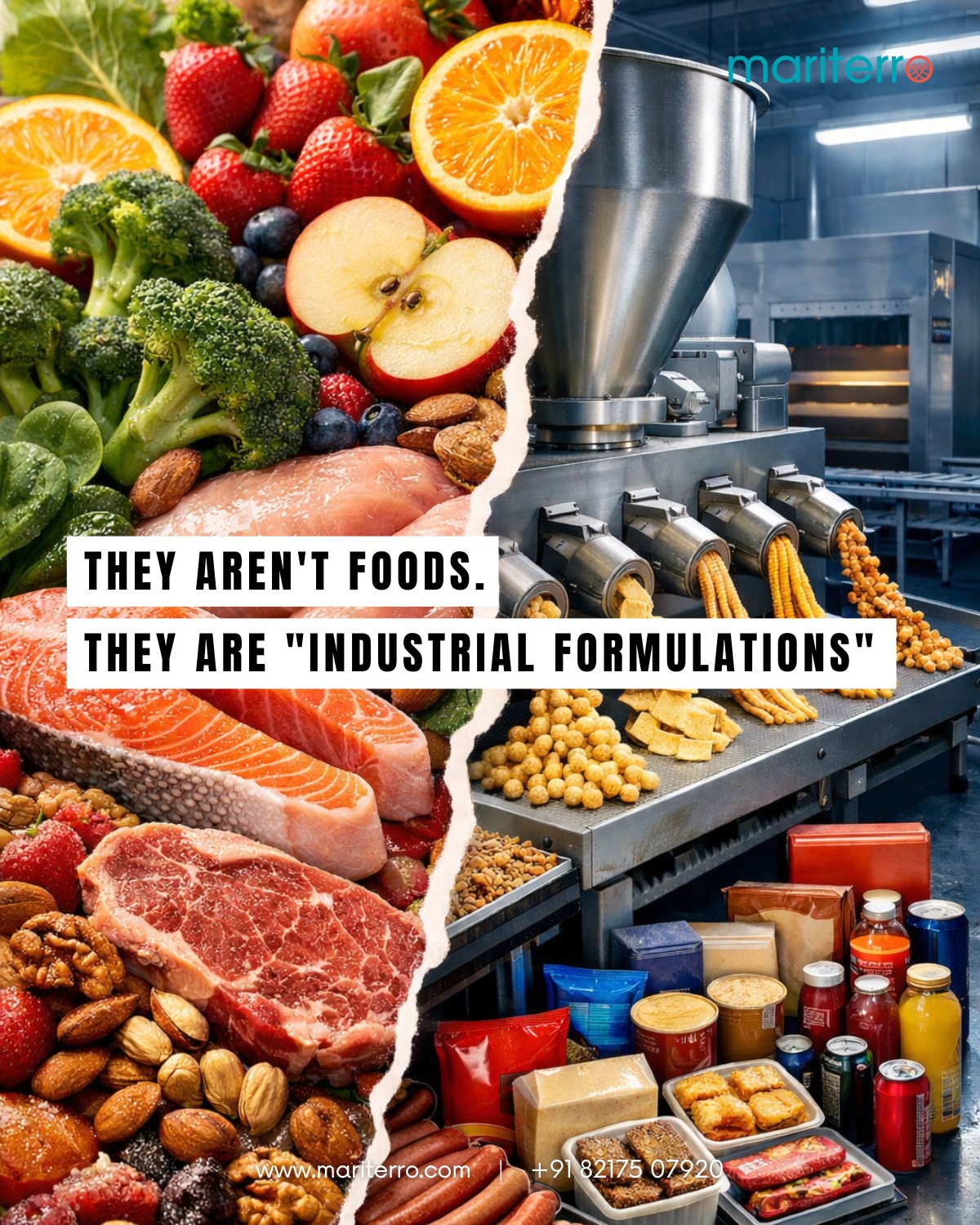
UPFs aren’t just nutritionally poor. They are biologically disruptive products engineered with industrial emulsifiers, synthetic flavour enhancers, refined starches, and preservatives that have no equivalent in any home kitchen. Think flavoured breakfast cereals, packaged protein bars, instant noodles, energy drinks, and most fast food. Per the NOVA food classification system, these aren’t really food in any ancestral sense. They are food-like constructions optimised for shelf life, palatability, and profit with human health as an afterthought.
In 2024, the BMJ published a landmark umbrella review of epidemiological meta-analyses covering UPF exposure and health outcomes. The verdict: UPF consumption was consistently linked to over 30 adverse health outcomes. Participants with the highest UPF intake carried a 17% increased risk of cardiovascular disease. A 2025 follow-up meta-analysis found a 15% increased risk of all-cause mortality with each additional 10% increment in UPF consumption adding roughly 10% more mortality risk. That’s a dose-dependent relationship between a food category and death.
The mechanisms are well-documented. UPFs are typically:
Stripped of dietary fiber, eliminating the buffer that slows glucose absorption
Loaded with oxidised fats and sodium that damage arterial endothelium
Rich in advanced glycation end-products (AGEs) that accelerate vascular aging
High in refined carbohydrates that trigger sustained systemic inflammation
This isn’t acute poisoning. It’s slow, cumulative biological erosion — often invisible until a chronic disease diagnosis arrives a decade later.
A 2025 review in Nutrients confirmed what microbiome researchers have suspected for years: UPFs deplete critical beneficial bacteria like Akkermansia muciniphila and Faecalibacterium prausnitzii, weaken the intestinal lining, and create chronic low-grade systemic inflammation — the silent engine behind metabolic syndrome, type 2 diabetes, colorectal cancer, and autoimmune conditions.
Specific additives are particularly damaging: emulsifiers like carboxymethylcellulose thin the protective mucus layer of the gut wall; artificial sweeteners disrupt microbial composition and reduce short-chain fatty acid production; carrageenan promotes low-grade mucosal inflammation even at doses classified as ‘safe’ by regulatory bodies.
The brain isn’t spared either. A 10% increase in UPF consumption has been linked to a 21% increased risk of depression symptoms over five years. A 2025 scoping review in Frontiers in Nutrition found dose-dependent associations between UPFs and anxiety, depression, ADHD, and disordered eating, particularly in younger populations.
The pathway runs through the gut-brain axis: UPFs disrupt the bacteria that synthesise serotonin and GABA, trigger neuroinflammation, and dysregulate the dopamine reward system in ways that mirror addiction models. This isn’t incidental UPFs are designed to be hyper-palatable. The result is compulsive consumption that isn’t a personal failure. It’s a biological response to deliberate engineering.
Policy is beginning to catch up. In July 2025, the FDA and USDA jointly launched an initiative to establish a federal definition for ultra-processed foods. Chile, Brazil, and Mexico already mandate front-of-package warning labels with measurable effects on consumer behaviour and manufacturer reformulation pressure.
In the workplace, the implications are equally clear. UPF-heavy diets correlate with reduced cognitive performance, higher rates of mental health burden, and greater healthcare utilisation. Organisations serious about workforce wellbeing can start by:
Auditing vending and cafeteria menus against UPF criteria
Subsidising whole-food meal options as a core employee benefit
Integrating food literacy into wellness and EAP programmes
Treating food environment quality as a strategic health investment
For individuals, the most evidence-backed shift isn’t perfection, it’s processing-awareness over calorie-counting. Cook one more meal from scratch per week. Choose ingredients over ingredient lists. Question anything engineered to make you want more of it.
The science has moved past debate. Ultra-processed foods aren’t just empty calories, they are a systemic public health threat, and the damage is accumulating quietly in millions of bodies right now. The question isn’t whether to take this seriously. It’s how quickly we’re willing to act.
What’s one change you could make this week, in your kitchen, your workplace, or your community?
What are ultra-processed foods (UPFs)?
Ultra-processed foods are industrial formulations made from refined substances extracted from whole foods, combined with additives not found in home cooking: emulsifiers, artificial flavours, colorants, and preservatives. Common examples include packaged snack cakes, instant noodles, flavoured breakfast cereals, most fast food, and many flavoured beverages.
How do UPFs affect mental health?
High UPF intake is linked to increased risks of depression and anxiety. The mechanisms include gut dysbiosis that disrupts neurotransmitter production (particularly serotonin and GABA), neuroinflammation driven by systemic inflammation, and dysregulation of dopamine pathways through engineered hyper-palatability.
Can UPFs damage gut health?
Yes. UPFs deplete beneficial bacteria, weaken the intestinal lining, and create chronic low-grade systemic inflammation, the underlying driver of a wide range of chronic diseases, from cardiovascular disease to autoimmune conditions.
Are all processed foods harmful?
No. Minimally processed foods, like frozen vegetables, canned legumes, or plain yogurt are generally benign or beneficial. The concern is specifically with ultra-processed foods: those with additives, destroyed food matrices, and optimisation for palatability over nutrition.
Why are UPFs considered addictive?
UPFs are engineered with combinations of fat, sugar, salt, and texture that activate dopamine reward pathways more intensely than natural foods. Neuroimaging and behavioural research shows patterns consistent with addiction models: tolerance, craving, and compulsive consumption.
Should governments regulate ultra-processed foods?
The scientific evidence is now sufficiently strong to justify regulatory action. Several countries have implemented mandatory warning labels with demonstrated effectiveness. The US FDA and USDA launched a joint UPF definition initiative in 2025. Most public health researchers argue voluntary industry action is insufficient.
How can families practically reduce UPF consumption?
Start with substitution, not elimination: swap packaged cereal for oats, flavoured yogurt for plain with fruit, packaged snacks for nuts or whole fruit. Cook one more meal per week from scratch. Involve children using simple rules: ‘if it has more than five ingredients you can’t pronounce, leave it on the shelf.’
What role should corporations play in employee nutrition?
Employers bear both a moral and a financial interest. High UPF diets correlate with reduced cognitive performance, increased mental health burden, and higher healthcare utilisation. Forward-thinking organisations are auditing food environments, subsidising whole-food options, and integrating food literacy into wellness programmes.
Tell us more about your requirement.
Our Team will get touch with you in 24 Hours